


What began as a discussion about subdivision access has evolved into a broader conversation about growth, property rights, housing availability, and the future of development in Sevier County.
As Sevier County continues to grow, discussions about roads, infrastructure, housing, and development are becoming more common. One recent topic that has generated considerable conversation is whether future subdivisions should be required to have more than one entrance and exit.
Supporters of additional access points often cite emergency response, evacuation planning, and public safety concerns. Others question whether new standards could create unintended consequences for future landowners, housing development, and property rights.
The discussion raises a larger question:
How should Sevier County balance public safety, infrastructure, property rights, and future growth?
Sevier County Has Changed Dramatically Over the Last 25 Years
There is no question that Sevier County looks very different today than it did in 2000.
Population growth, tourism growth, second-home ownership, short-term rental development, and increased demand for housing have transformed many parts of the county.
Sevier County Population Growth (2000-2024)

As more people choose to live, invest, and vacation in Sevier County, pressure naturally increases on roads, utilities, schools, emergency services, and housing supply.
Most Existing Subdivisions Were Built Under Different Conditions
Many of Sevier County's established neighborhoods and developments were approved decades ago.
In fact, single-access subdivisions are not unusual in mountain communities. Topography, ridgelines, streams, and property boundaries often limit road connectivity.
Throughout Sevier County, many established subdivisions, neighborhoods, and mountain developments were approved with a single point of access, reflecting planning standards and development patterns that have existed for decades.
Historically, planning philosophies often favored:
- Cul-de-sacs
- Limited neighborhood traffic
- Reduced infrastructure costs
- Quiet residential streets
As a result, many existing subdivisions, cabin resorts, and residential developments throughout Sevier County operate with a single primary entrance.
These concerns are legitimate and deserve thoughtful consideration.
Infrastructure and Traffic Considerations
Traffic and infrastructure concerns are often part of development discussions, particularly as Sevier County continues to grow.
Rather than relying on opinions or assumptions, residents can review traffic information directly from the Tennessee Department of Transportation (TDOT), which publishes Annual Average Daily Traffic (AADT) data and traffic count maps used by planners, engineers, and local governments.
For readers interested in reviewing the data themselves, visit:
- TDOT Annual Average Daily Traffic Maps
- TDOT Traffic Data Resources
Is the Real Debate About Roads or Growth?
Many land-use discussions begin with technical issues such as road access, infrastructure, or traffic.
However, these conversations often reflect broader community concerns.
Questions worth considering include:
- How much growth should Sevier County accommodate?
- How can infrastructure keep pace with population increases?
- How can rural character be preserved?
- How can housing remain attainable for local families?
- What role should private property rights play in future development decisions?
There are no simple answers, but these are important questions for residents and community leaders alike.
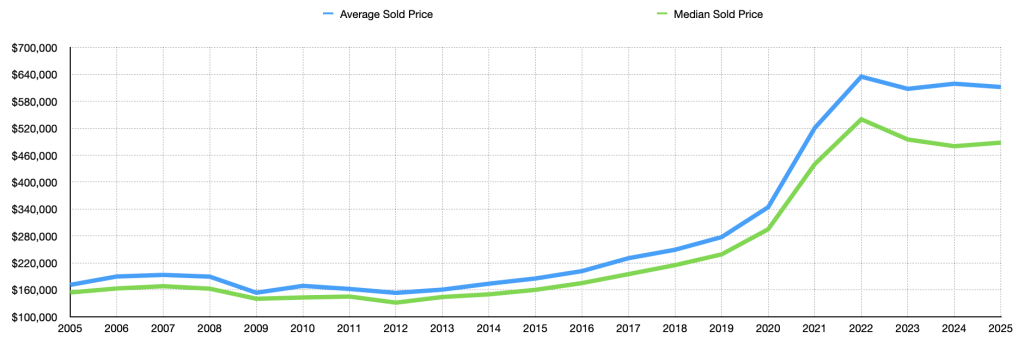
The Housing Supply Challenge
Housing affordability and housing supply have become major concerns throughout East Tennessee.
As demand increases and available land becomes more limited, development decisions can have lasting impacts on housing availability and pricing.
Sevier County Home Prices Then vs. Now *Based on retrievable MLS info. May not fully encompass all sales over time.
The Impact on Future Generations of Landowners
One question that deserves careful consideration is how new development standards could affect future generations of Sevier County property owners.
Many families in our area have owned farmland and large tracts of land for decades. A third or fourth generation owner may someday inherit 20, 40, or even 100 acres along Boyd's Creek Road, Old Newport Highway, or other rural areas of the county. For some families, the highest and best use of that land may eventually be residential development, whether they choose to develop it themselves or sell it to a developer.
If future regulations require multiple points of ingress and egress that cannot reasonably be achieved because of terrain, neighboring ownership, or road limitations, some properties could become significantly more difficult to develop. That could reduce opportunities that previous generations expected to pass along to their children and grandchildren.
For some families, land may represent decades of hard work and one of the largest assets they will ever pass to future generations.
This does not mean safety concerns should be ignored. It does mean that any changes to development standards should be evaluated carefully and consistently. Decisions made today could influence not only current projects, but also the options available to future landowners across Sevier County.
As community leaders consider growth, infrastructure, and public safety, it is worth asking whether new rules are being crafted for a single project or for the next fifty years of development throughout the county.
Paste
Could New Development Rules Affect Future Generations?
Development potential intact
Development potential reduced
"Planning decisions made today may influence development opportunities and property values for future generations of Sevier County landowners."
HTML code here...
"Planning decisions made today may influence development opportunities and property values for future generations of Sevier County landowners."
Should Future Standards Be Different From Past Standards?
Perhaps the most important question is not whether one specific development should or should not be approved.
Instead, the larger question is whether future developments should be held to standards that differ from those applied to existing communities.
If standards are changed, those changes should be carefully evaluated for their long-term impact.
Questions worth considering include:
- Should future developments be required to meet standards that existing developments were not required to meet?
- How can public safety be improved without unnecessarily restricting property rights?
- How can future housing needs be balanced with infrastructure concerns?
- What unintended consequences could result from changes made today?
These are not questions with easy answers, but they deserve thoughtful discussion and long-term planning.
Looking Ahead
The discussion surrounding subdivision access is ultimately about much more than roads.
It reflects a broader conversation about growth, housing, infrastructure, property rights, and the future of Sevier County.
As population growth continues and development pressures increase, community leaders will face difficult decisions that affect not only today's residents, but future generations as well.
The challenge will be finding a balance that protects public safety and community character while preserving opportunities for responsible growth, private property rights, housing availability, and economic opportunity.
Whatever position one takes on a particular development, the decisions made today will help shape Sevier County for decades to come.
Frequently Asked Questions
Do Tennessee subdivisions have to have two entrances?
No. Tennessee does not have a statewide requirement that all subdivisions have two entrances. Requirements are generally established at the local level through planning commissions and subdivision regulations.
Why do some subdivisions only have one entrance?
Many developments, particularly in mountainous areas, were designed with a single access point due to terrain, property boundaries, infrastructure costs, and historical planning standards.
Who decides subdivision requirements in Sevier County?
Subdivision standards are generally established and administered through local planning and zoning processes.
Why is subdivision access becoming a larger issue?
Population growth, traffic concerns, emergency response planning, and infrastructure capacity are receiving greater attention than they did decades ago.
Could new development regulations affect future landowners?
Potentially. Depending on how regulations are written, future development opportunities for inherited farmland and large tracts could be impacted.
How has Sevier County changed over the last 25 years?
Sevier County has experienced significant population growth, increased housing demand, tourism expansion, and rising property values, all of which influence planning and development discussions today.
About the Author: Penny Cowell is the Owner and Principal Broker of Monarch Realty LLC in Pigeon Forge, Tennessee. Licensed since 2002, she has helped buyers, sellers, investors, and landowners throughout Sevier County and the Great Smoky Mountains region. Penny is a past President of the Great Smoky Mountains Association of REALTORS® and has served at the local, state, and national levels of the real estate industry.
Monarch Realty LLC Featured Listings: https://monarchrealtynow.com/Featured.php?boardId=98&featuredOnlyYn=true&status=active,pending,sold&sort=statusV10Featured
About Monarch Realty LLC https://monarchrealtynow.com/Featured.php?boardId=98&featuredOnlyYn=true&status=active,pending,sold&sort=statusV10Featured
Reviews: https://share.google/A6vGzStfrwHnafkqE
Sources
- U.S. Census Bureau Population Data
- Tennessee Department of Transportation (TDOT)
- Sevier County Planning and Development Resources
- Great Smoky Mountains Area MLS Market Statistics
- Monarch Realty Market Research and Analysis